Category Archives: General Care

Want Versus Can

I have written a lot about pet ownership especially to consider carefully before getting a pet rabbit or any other type of animals as a pet. I came across this very interesting article and once more, matching your lifestyle to a suitable pet seemed to be paramount when making the decision to own a pet.

I have heard about people getting large dogs as pets but had to give them up for adoption because they were offered jobs that require them to travel or work at irregular hours. We have many priorities in life and sometimes have no choice but to discard commitments that are lower in the priority list. Sadly, one of the items at the lower end of the priority list happens to be our pet.

It is easy for us to want many things in life but we often forget if we can have them. We cannot really classify keeping a pet as a need so it really it a matter of can we have one or not. But I really can understand if the want overpowers the can.

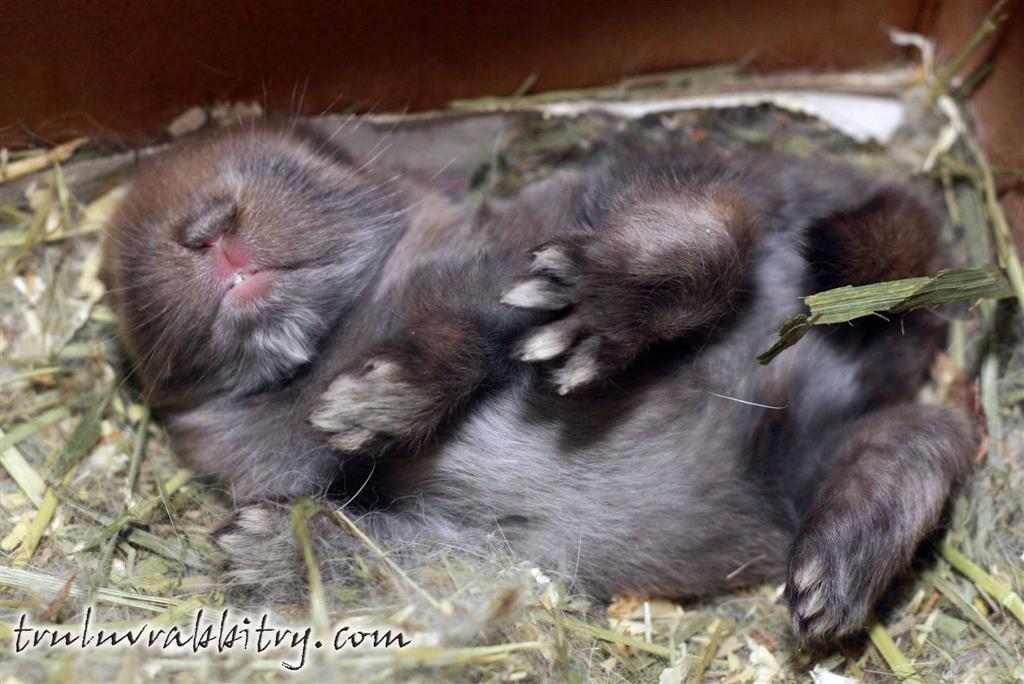
Who can resist this charm?

Way beyond cute!

1 Comment

Filed under Rabbit Education, Tips For Newbies

Happy Easter!

For many, Easter symbolizes LIFE and for some parts of the world, Easter coincides with Spring. Spring is the season when flowers bloom and the meadows come alive! For some traditions, the rabbit and eggs are symbols of fertility and abundance during Easter. For Christians around the world, Easter is the celebration of Jesus’ resurrection and that in itself represents LIFE.

It is said that during Easter, many tend to buy rabbits to be kept as pets and most of the time, the outcome may not be a happy one (for the rabbits). The little bunnies soon out grow their cuteness and we soon find them in the shelters.

We really need to take some time to think about it and not buy pets on impulse. Whenever we think of getting a pet, we must first find out if the pet is a perfect fit into our lifestyle. We must ensure that we are able to accommodate and care for another life in our daily routine.

I recently visited the horse stable and I could see that the horses there are really happy as they are all well taken care of. In my opinion, a healthy horse is one with flesh and their rib bones are not visible.

Having a good time at the stable

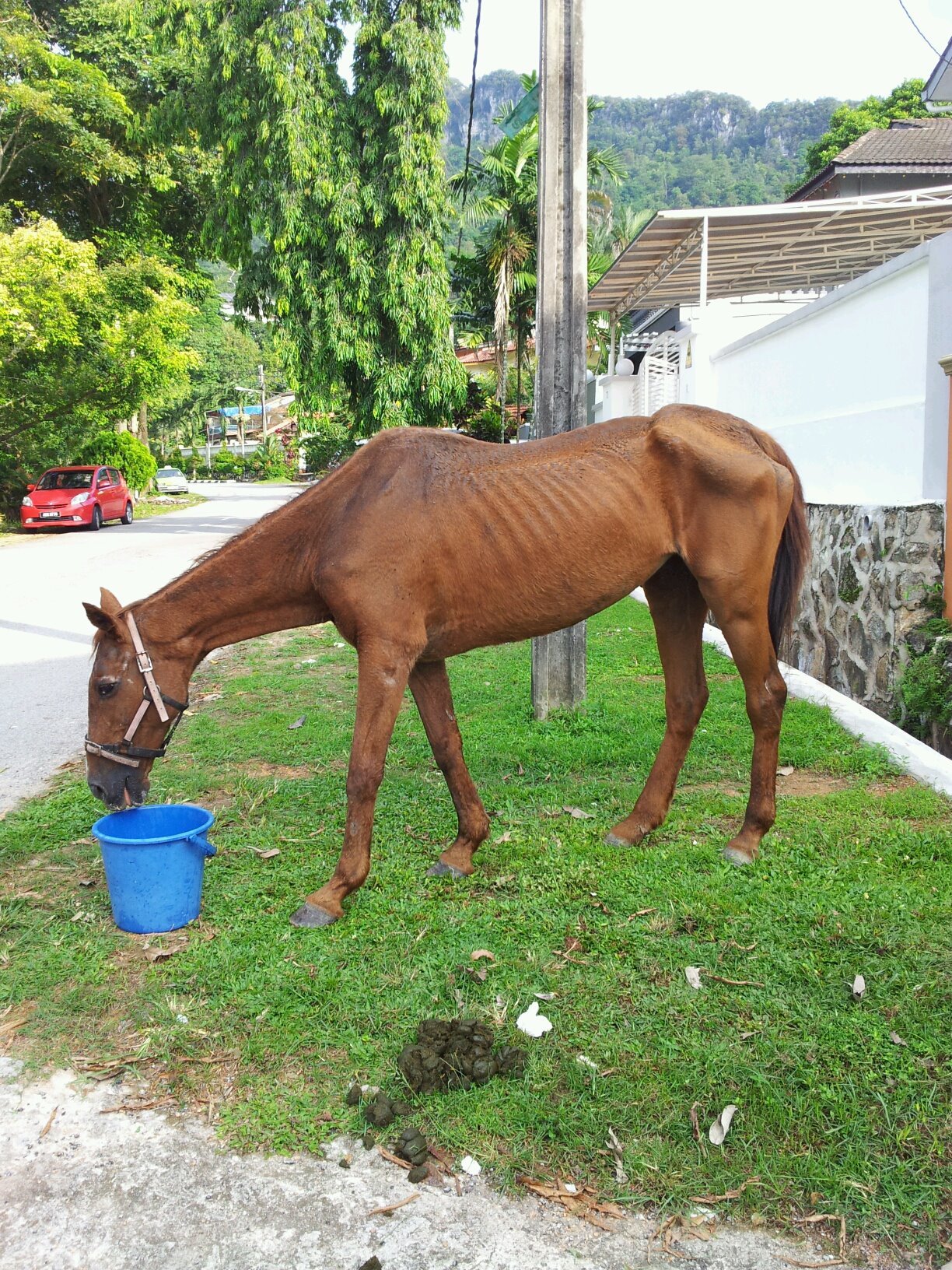
Around the same time, I learn from a friend living at the heart of the Kuala Lumpur city that she and her friends found a horse roaming in the housing estate. And looking at the condition of the horse (through photos), it seemed to be pretty skinny and neglected.

Is there something wrong with this picture?

Besides from the skinny horse, I believe looking at the picture, anyone would feel that it is an inappropriate place to have a horse. Roaming around a housing estate, the horse is at risk of getting hit by a car or injuring someone if it goes into a rampage due to the stress and fear. The environment is not conducive for a horse and it is clear that it has not been given the correct diet it needs to thrive.

My friend and a few other good Samaritans have since transported this horse to a proper location in hope that it will soon recover from its emaciated condition and also to live out its life as a normal horse. They have also given a name to this horse – Dixie.

This is much better!

This is not the first time I have heard of horses ended up in housing estates but I hope we do not have to see more of this in future. As I mentioned, we must first know the basic needs of a pet and if we are able to provide it with a good environment to thrive. Some pets live shorter lives while others longer, their lifespan must also be taken into consideration as our commitment and responsible for them last as long as they are alive.

I urge everyone to do your part in saving a life. Whether you choose to buy or adopt, ensure that you are able to provide your pet with the best and for as long as it lives.

Happy Easter Everyone!

Have a Blessed Easter!

Leave a comment

Filed under Community Service, General Care

We’re going JUMBO & indulging at PET EPICURE!

Coming To A Location Near You!

They say LUV knows no boundary and for that reason, we are working our butts off to get the essentials to a location near you! I just want to let everyone know that TinyCritterz’ 1kg Timothy Hay can be purchased at the following locations:-

Kuala Lumpur

1.  Pet Epicure

16 Jalan Bandar 2, Taman Melawati, 53100 KL
OUR OPENING HOURS ARE
CLOSED on Mondays and Public Holidays
9.30am – 5.30pm Tuesday to Friday
9.30am – 4pm Weekends
petepicure@gmail.com 0129059010 – Olivia 0123313318 – Alicia
http://petepicure.com

About Pet Epicure

I have written about Pet Epicure in the past but when it comes to this cosy little pet boutique (actually more than that), I have so much to write about it but just do not know where to start. The people at Pet Epicure are very passionate with what they do for the welfare of animals. Pet Epicure is mostly a cat/pet boarding facility but one will find many cats being put up for adoption as well. They are very kind hearted and can never turn down a cat (any cat for the matter). Most of what I learned about responsible pet ownership and breeding comes from Pet Epicure. They have inspired me to promote neutering to all my pet Holland Lop buyers. Pet Epicure carries a wide range of pet products including those for small animals. I would like to thank everyone at Pet Epicure for carrying TinyCritterz’ 1kg Timothy Hay and I hope rabbit owners in that area will be able to have access to good Timothy Hay!

Petaling Jaya

1. Perniagaan Jumbo

No. 20, Jalan SS5B/2
47301 Petaling Jaya
Selangor Darul Ehsan
03-78744499

About Perniagaan Jumbo

Perniagaan Jumbo has been around for almost 30 years. Nestled in the middle of the Kelana Jaya housing area, this friendly pet shop is famous among pet lovers in the surrounding neighborhood. This is the pet shop that I first learned about Hamsters 24 years ago (when I was only 7 years old). Being an animal lover, I spent most of my weekends coming to this shop and sometimes assisting in its daily operations just for fun. I always find pleasure in chatting with both Uncle Cheah & his wife. Since three years ago, the business has  been passed on and now operated by close relatives and Perniagaan Jumbo is as welcoming as before. I am always happy spending time in this pet shop and each visit will last more than an hour. It brings back a lot of wonderful childhood memories. Back then, Kelana Jaya has not been so developed and we did not even have the Giant Hypermarket. Through the years, Perniagaan Jumbo stands the test of time and has earned a place in the hearts of those in the neighbourhood. I am so happy that Mr. Cheah agreed to carry TinyCritterz’ 1kg Timothy Hay at his shop so that it is easily accessible to all rabbit lovers in the neighbourhood.  Below is the location based on Google Maps:-

Guess who's back?

Digit says HELLO!

Leave a comment

Filed under Bunny Business, Promotion, Publicity, Rabbit Diet

A little something about Fuzzy Holland Lops

I know many are surprised to see a Fuzzy Holland Lop produced at Tru-Luv Rabbitry. As this is totally expected and not uncommon, I am sure some were taken aback and perhaps started doubting the purity of my Holland Lops. I believe Laurie Stroupe of The Nature Trail has written a very good article about the Fuzzy gene in Holland Lops – http://www.thenaturetrail.com/Holland-Lop-Fuzzy-Fur.htm.

Fuzztort the fuzzy HL!

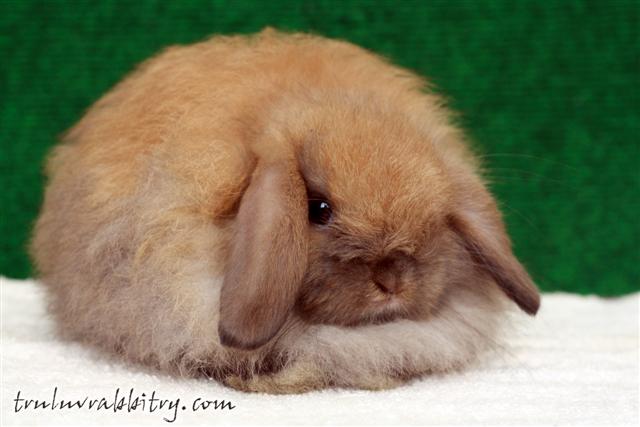
Fluffy!

I really do hope that Fuzztort will be able to help someone here in Malaysia who is or interested in working with the American Fuzzy Lop (AFL) breed. As mentioned in Laurie’s article, though a Fuzzy Holland Lop can be shown as AFL, it should not be taken as a real AFL until a rabbit has 3 generations of AFL in its pedigree.

Fuzztort comes with a “Holland Lop” pedigree but is marked as a FUZZY HOLLAND LOP.

If you are interested in a Fuzzy Holland Lop as a pet or you think that Fuzztort can help you with your AFL development, please feel free to get in touch with me via email (truluvrabbitry@gmail.com).

3 Comments

Filed under Juniors, Rabbit Genetics

Bunny DIY Toys

I find this very economical…

2 Comments

Filed under Recommendations, Tips For Newbies

Good news and more good news!

I received an SMS this morning from Tru-Luv Betty’s owner. His last words on the SMS was “Great year, Tim!”.

Infact it is eventhough there were some major losses and difficult life situations. Things are looking really good.

Good news #1

I know everyone has been wondering what has happened to MROC. As I mentioned in one of my earlier post, it is very much alive. We are in the midst of getting it registered officially and hopefully get it ARBA chartered. There is still a lot of nitty gritty that needs to be finalize. Please pray for all involved in this effort.

***********************************************

Good news #2

I am very happy, excited and honored to be appointed the District Representative for ARBA District 9. I will be serving all ARBA members here in Malaysia. If you are a member of ARBA, please get in touch with me if you have any interesting news to share or you have any problems that you need help with. I will be please to assist you.

For your information, Malaysia comes under FOREIGN subscription and therefore we are under the jurisdiction of District 9 currently headed by Dr. Jay Hreiz.

I would like to take this opportunity to thank Dr. Jay Hreiz for entrusting me with this honorable role. I will serve to the best of my ability.

So folks, please don’t be shy and do get in touch with me. I will be very happy to hear from you and I am sure our friends in USA would love to know about us as well.

4 Comments

Filed under For Sale, General Care, Recommendations

The Reason Behind The Tattoo

Identification.

That is the only word to describe the reason why rabbit breeders tattoo their rabbits. There are 2 ways used for identification in rabbits. Firstly is the tattoo on the left ear and secondly, an identification ring on one of the legs. The identification rings are mainly used in the European countries and British Rabbit Council (BRC) breeders. I personally feel that the rings are less permanent as they can be removed easily.

As for tatoo, ARBA breeders usually tattoo their rabbits on the LEFT ear. The Registrar normally tattoo the right ear. Therefore, if you see a rabbit with both ears tattooed, then you are holding a rabbit that has been registered with ARBA. What is the difference between a rabbit registered with ARBA? Only rabbits registered with ARBA can obtain a GC Certificate and thus, you can only grand a rabbit if it is registered.

If a rabbit is not registered with ARBA, it still can be shown and obtain GC legs. As a senior, if a rabbit obtain 3 GC legs under different judges, then the rabbit can be granded if it has been registered.

I am going off topic for a little while more. In ARBA world, there are 2 roles which are very important.

The Registrar – the person that helps breeders and rabbit owners to get their rabbits registered.

The Judge – the person that is responsible for evaluating your rabbit and award a GC leg whenever deemed fit.

So why do we tattoo? Yes, for identifications. You may have many rabbits both you currently own and those that you have sold. A simple pedigree is not sufficient to link it to a rabbit. Therefore, when you have a 3 generation pedigree, it must also state the tattoo number which is the same as the number on the left ear of the rabbit.

That’s how the tattoo is useful at the breeder’s end. To identify each rabbit if there are more than 1 that may look similar. With the tattoo number, the breeder can go through the records and pull up its pedigree to trace back on the lineage.

As for the Rabbit Shows, the tattoo is very important. The Tattoo acts like our Identification Card (IC). There will be hundreds of rabbits and how do we identify our own rabbits in a place filled with – rabbits? Besides that, during a rabbit show, the judge must not know who the owner of the rabbit he/she is judging to avoid partiality and biasness. Since you cannot possibly tattoo the breeder’s name on the rabbit, most uses the conventional way of number combinations.

There are 2 types of tattoo tools that can be used:
1) Tattoo Clamp with digits
This is like the tool used in ear piercing except it has got individual digits with many small needles that make up a number. Depending on the number of digits required, the tattoo digits are fitted into the clamp and pressed on the rabbit’s ear.

2) Tattoo Pen
This is becoming a widely used tool as it is easier to write and some say is less painful for the rabbits. I personally think that the pain last longer as the numbers are being “etched” into the skin. I hope to try this one out in the near future but for now, I prefer the clamp method.

So as a conclusion, tattoo is a neccessity if you want a good identification method. It is not a luxury item as you can see. I do not charge more because I tatoo my rabbits. I don’t think it is something to be charged extra for. It is not glamorous to have tattoo. A tattoo does not make a non pedigree rabbit a pedigreed rabbit. Everything in the rabbit world right now runs in such a way that it is self regulatory. There is no one body that governs the identification of rabbits vis-a-vis to the likes of the dog world where a club issues microchip and pedigrees.

I personally tattoo my rabbit solely for the reason of identification and it goes hand in hand with the pedigrees I issue to my adopters/buyers.

1 Comment

Filed under General Care, Rabbit Show, Random Topics, Tips For Newbies

Ouch, my crap hole hurts!

As a continuation of my posts entitled, Chopped Hay Is Junk! & Karate Chopped Hay Anyone?, I read that there has been an issue of wasted “unchopped” hay. What I learn from raising pets so far whether it is rabbits or otherwise, is that, creativity is much needed most of the time and problem solving skills come in handy. Two posts has been written and we are still revisiting such a simple topic. Perhaps my writing skills has been proven ineffective. This time around I will try to put the point across in a much (hopefully) effective way. I am also keeping in mind that there are those who are still skeptical and do not believe what I write, for those who appreciate, I am sure you all will love it.

If I remember correctly, one of the most effective ways to remember things is to relate it in some funny ways. Not forgetting the objective of this post that is HOW TO USE HAY EFFICIENTLY, here goes…

(Knock on door)

Me: Yes, can I help you?

Wife: You have been in there for more than an hour, what the hell are you doing?

Me: I need TP (Toilet Paper) for my bunghole!

Wife: You have an entire new roll of it in there!

Me: Give me a minute…

After 2 hours, I have in my hand…

In case you didn't know, this is a toilet roll or toilet paper or TP

After more pushing and pulling, I have this….

With a sore crap hole, I still have so much to finish!

After summoning all my energy and strength, I raised a rather heavy pair of scissor while making sure that I do not pop the piles, with the other hand holding the heavy camera…

It took a lot of effort to come to this point...

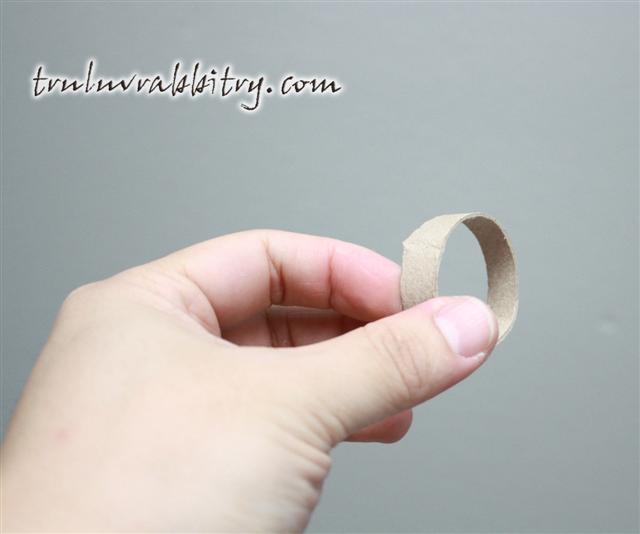
To my surprise, I got cute little mini toilet rolls that looks like….

PrecioussSSssSss......The One Ring! I can see elven words inscribed with doodie!

**********CENSORED**********CENSORED**********CENSORED**********

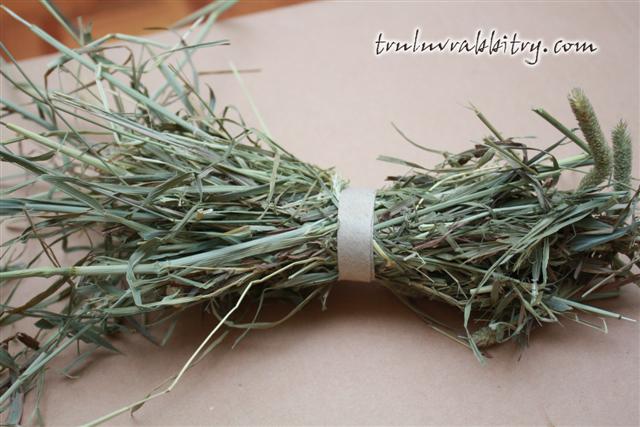
You just need to figure out how the hay got in there...

I gave that to one of my bunnies……

And after a day……

You get CHOPPED HAY!!!!

So the question remains, the hay comes first or chopped hay comes first? Or rather, the toilet paper comes first or the crap comes first?

Good Luck!

Cast:

1. TinyCritterz Timothy Hay (as themselves EXTREMELY FRESH)

2. The One Toilet Roll Ring (as itself)

3. Mr. Scissors (as itself)

4. Hand (as itself)

3 Comments

Filed under Community Service, General Care, Rabbit DIY, Tips For Newbies

Peanut (Revisited)

I have previously written about the effects of double dwarf genes in kits born of 2 dwarf carriers. Each parent contributes one dwarf gene to the kits and hence, all the mambo jambo.

Let’s take this a little further since I was about to reply to someone asking this question, I thought it would be best to share the information on the blog instead. But before I continue, I would like to stress that I hold no recognized certification in Animal sciences or whatsoever and what I share is mere knowledge acquired through research. Any experts out there are welcome to correct me if I am wrong.

The question was why Peanuts always end up dying.

The organ in question here is the Pituitary gland. The functions of the Pituitary gland are as follows:

* Growth
* Blood pressure
* Some aspects of pregnancy and childbirth including stimulation of uterine contractions during childbirth
* Breast milk production
* Sex organ functions in both men and women
* Thyroid gland function
* The conversion of food into energy (metabolism)
* Water and osmolarity regulation in the body
* Secretes ADH (antidiuretic hormone) to control the absorption of water into the kidneys
* Temperature regulation

I would just like to stress on the points that I have bold and underlined. The double dwarf gene causes the pituitary gland to be stunted/under developed/damage. And thus, without it functioning properly, the little kit is not able to grow properly.

Sometimes they suckle harder then their siblings but still end up dying. That is because they are unable to convert what they suckle into energy and thus, death ensues.

We all know that kits need help with keeping warm and that is the reason why mommy will always pull fur and make a warm nest. They start off having no control over their body temperature and the fur keeps them alive. With peanuts, they are unable to regulate their body temperature although a warm nest is provided. The cost of death mostly for peanuts is the failure to regulate their body temperature.

Hope that helps in answering the question of peanuts.

So does that mean, “Give monkeys, get peanuts?” or “Give peanuts, get monkeys?”.

1 Comment

Filed under Rabbit Genetics

Viral Hemorrhagic Disease (VHD) & Myxomatosis Alert!

IMPORTANT DISCLAIMER: There is NO occurrences of the above mentioned @ Tru-Luv Rabbitry. I do not want this taken as an opportunity for nasty people to spread wild allegations and rumors so for the record I am just RELAYING information picked up through comments on my blog for the good of all RABBIT OWNERS in MALAYSIA in the good spirit of SHARING!

VHD and Myxomatosis is 2 very deadly viruses that affect rabbits. For more information please go to http://www.rabbit.org/care/vhd.html.

So far, there isn’t any news about an outbreak in Malaysia but I received a comment yesterday by one Ms. Jean (https://truluvrabbitry.com/2009/09/04/malaysian-rabbit-owners-club/#comment-2997) stating that her rabbits are dying one after another without any symptoms.

I am not too sure if the Veterinary Services Department would have any information regarding any outbreaks and if they have the vaccines for it. Sometimes I do understand that rabbits isn’t a top priority for most so it would be difficult to contain if an outbreak occurs. We as pet owners must be self sufficient and share the information to protect our loved ones.

Here are some preventive measures recommended by rabbit.org (taken from http://www.rabbit.org/care/vhd.html):
How to Protect Your Rabbits

  • House your rabbits indoors. We strongly suggest that they be kept indoors, or in enclosed environments. Rabbits who live or exercise outdoors are more at risk for contracting this disease.
  • Wash your hands thoroughly before handling your rabbits, particularly when you come home from places where other rabbits may have been, or where people who have been in contact with rabbits may have been. This would include places such as feed stores, pet stores, fair grounds, humane societies, etc.
  • Change your clothes and wash your hands after handling or coming in contact with rabbits. Wash these clothes twice in hot water before you wear them around your rabbit.
  • If you volunteer at a shelter, then have some special clothes and shoes that you wear only at the shelter. You may want to wear plastic bags over your shoes, secured with a rubber band. When you leave the shelter, remove the bags and dispose of them before you get into your car, making sure not to touch the outside of the bag. Follow clothes laundering instructions above, and shoe disinfecting instructions below. This protects the shelter rabbits as well as your own. The same considerations apply to anyone who sees rabbits at work and also has rabbits at home.
  • Adopt a “no shoes in the house” policy, or keep your bunnies from running in high traffic areas of your home. To disinfect shoes that may have been contaminated, you need to place the shoes in a foot bath that contains one of the following: 10% bleach solution, 2% 1-Stroke Disinfectant, Parvosol, or parvoviricide disinfectant. You may wish to speak with your veterinarian about how to obtain these. The shoes must be in contact with the disinfectant for at least ten minutes. The foot bath is recommended as it is important that during the ten minute disinfection time that the disinfectant remains wet. Merely spraying shoes with disinfectant and leaving them to dry is not effective.
  • Know your sources of hay and feed and if they are near areas of any outbreaks.
  • Minimize insects in your home by installing window and door screens. Eliminate mosquitoes and flies from your home.
  • Quarantine any new rabbit for 5 days. Always handle quarantined rabbits last, and keep all supplies for them separate from your other rabbit’s supplies.
  • To disinfect objects, use one of the disinfectants above, remembering that it must stay in contact with the item and remain wet for at least ten minutes.

UPDATES!

* if you are experiencing sudden death in your rabbits, please contact your State Veterinary Department, for SELANGOR, the contact number is +603-55103900 to inquire if there is an outbreak and get more information from them

I got this reply to the comment made by Ms. Jean from the Director of Rabbit Industry Council. Thank you very much Ms. Pamela Alley:

Hi, Jean–as Director of the Rabbit Industry Council, I’m very interested in hearing more about what you are seeing. What symptoms, how much time between deaths? What are you feeding/watering with? What breeds and what ages are affected?

RVHD is an OIE-reportable disease, so the Veterinary Services should be reacting with a bit more enthusiasm–contact your area’s government veterinary chief and if necessary, their superior in the agriculture and veterinary services.

Don’t let them pass rabbits off as unimportant! This disease (Rabbit Viral Hemorrhagic Disease) is very very nasty and can easily wipe out a majority of rabbits in the area.

The first step is to get a necropsy done by a veterinary service that knows what they are looking for; it is possible that members of the World Rabbit Science Association in your area may be able to help you with that. (Google the WRSA and ask the current president or secretary to help you find contacts near you.)

Some ‘trademarks’ of RVHD:
Deaths occur in animals over 8 weeks of age;
animals that are young may be ill but recover to become carriers for at least 1 month post-infection.
Death is sudden and may be accompanied by a scream and/or bloody discharge from the nose, mouth, eyes, or rear.
Losses are numerous and unaffected by ‘regular’ treatments such as antibiotics.
Necropsy findings include hemorrhagic lungs and liver with a reticulated pattern of hemorrhagic damage.

PLEASE DO NOT VISIT ANY OTHER RABBITRIES until you find out for sure what’s going on, and bleach your tires and shoes before and after going to the feedstore or other areas where others might pick up the virus (if that’s what it is). It is very very tenacious and tough!

Go to http://www.showbunny.com/RVHD/index.html for the full outline of the outbreaks in the early 2000’s in the US; the data there is likely to be quite helpful.

Good luck and please keep me posted!

Pamela Alley, RVT
Director, Rabbit Industry Council
Oroville, CA USA
RIC@cncnet.com

3 Comments

Filed under Community Service, General Care